
Downtime starts with vibration
Dynamic balancing
Dynamic balancing for headers, augers, shafts, fans, and other rotating components.
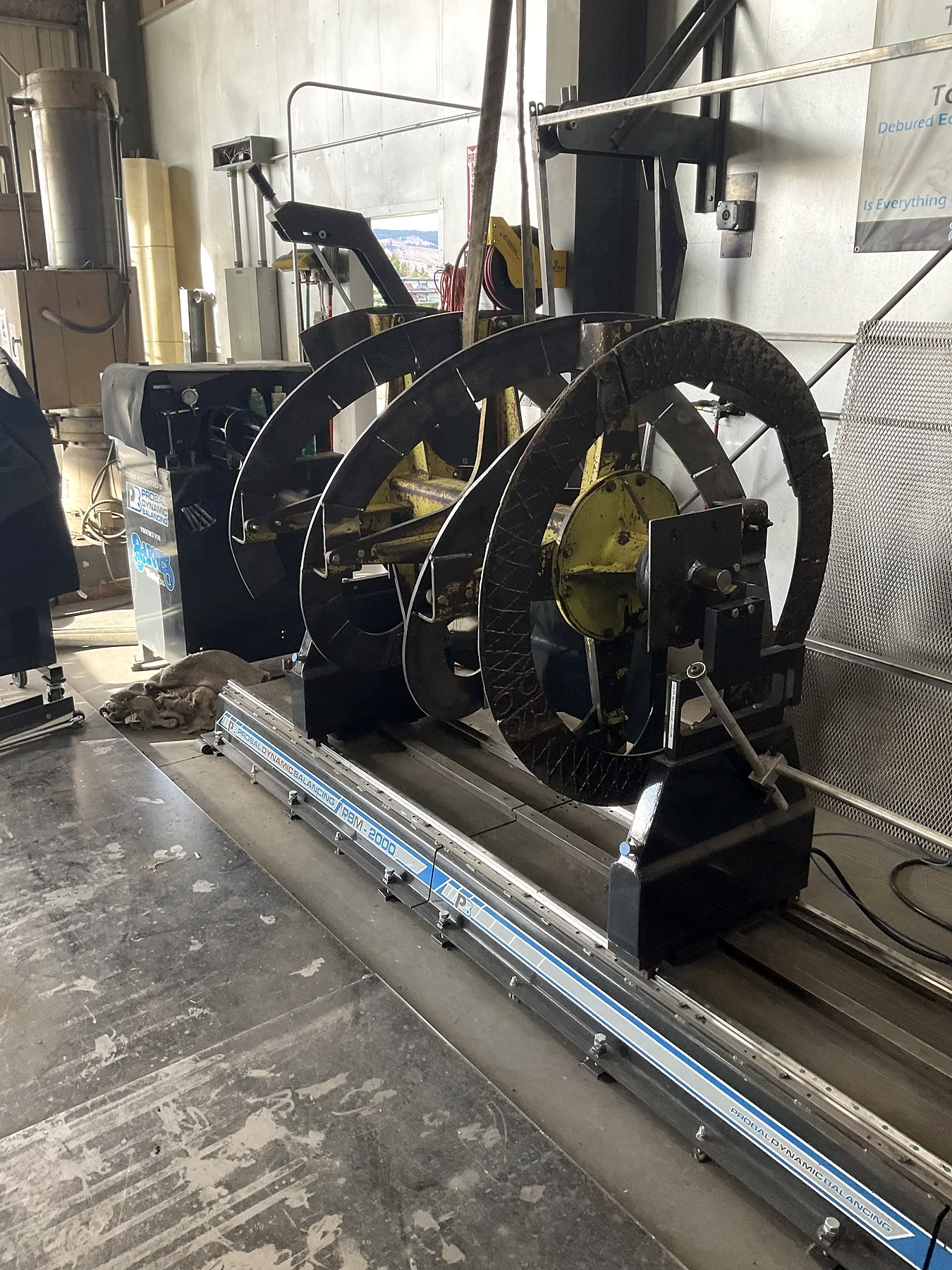
Downtime starts with vibration
Vibration may show up as bearing or gearbox wear, cracking, loose components, or repeated downtime. We review the rotor and the damage around it, complete the needed repair or machining first, then balance the prepared component.
Vibration that can accelerate bearing or gearbox wearUneven mass that can stress shafts, frames, and connected componentsCracking, premature wear, poor performance, or downtime around rotating equipment
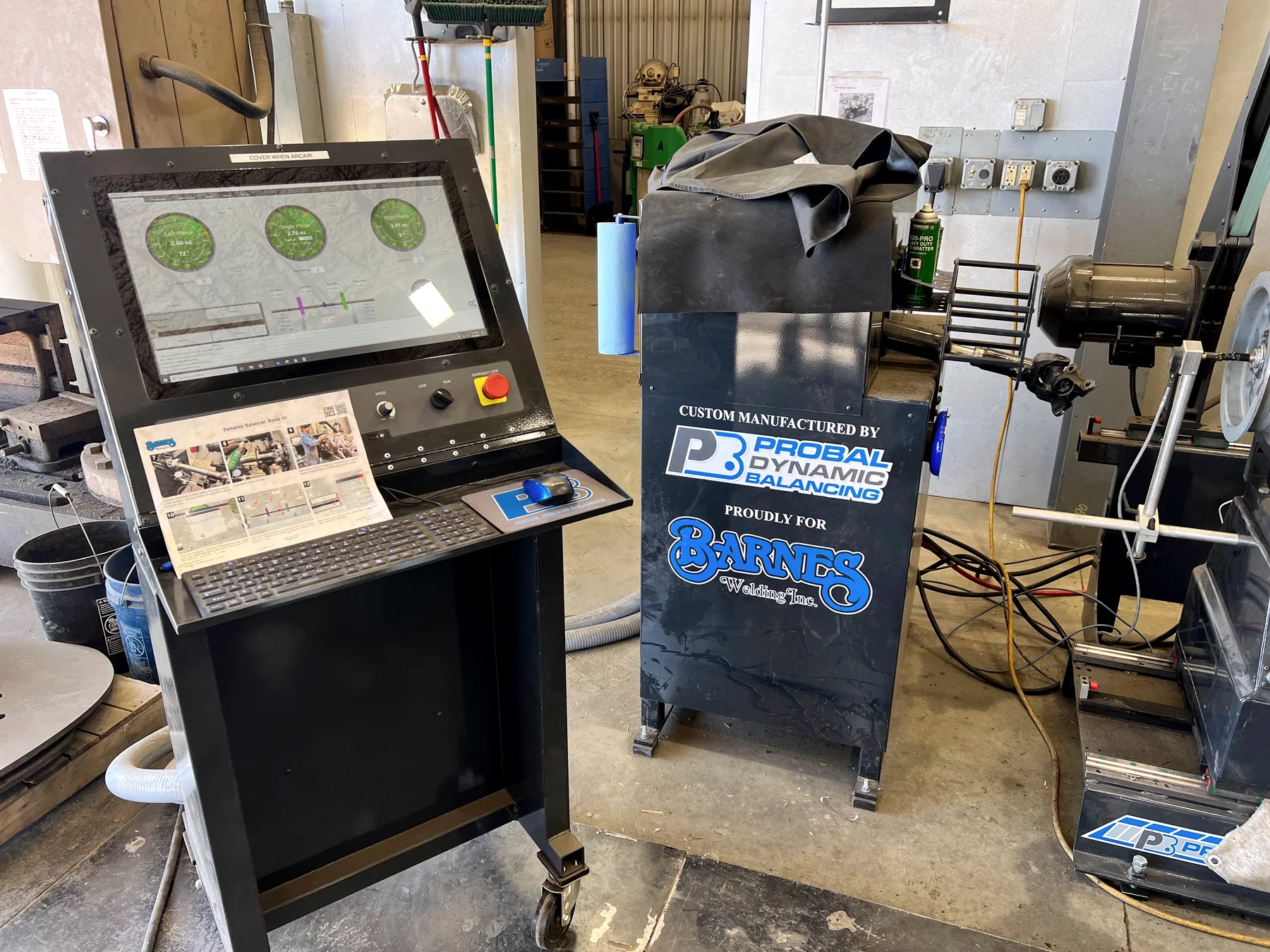
Balance the component and check the damage around it
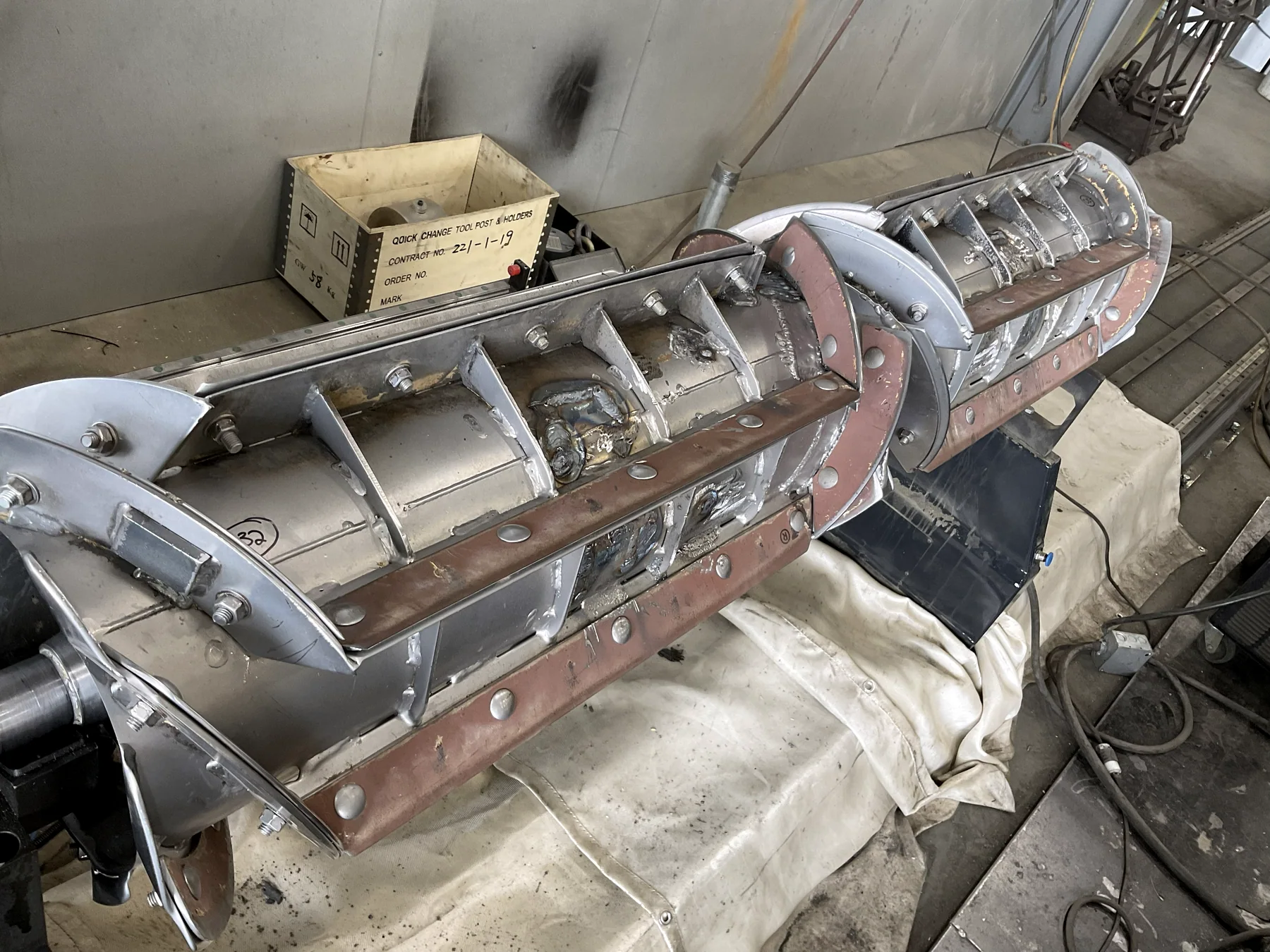
Fans, shafts, and rotating assemblies
Components with vibration or suspected uneven mass
Balancing connected to repair, rebuilding, or modification
Processes
Work involved
- Component and vibration review
- Condition inspection before balancing
- Repair or rebuilding coordination
- Dynamic balancing and verification
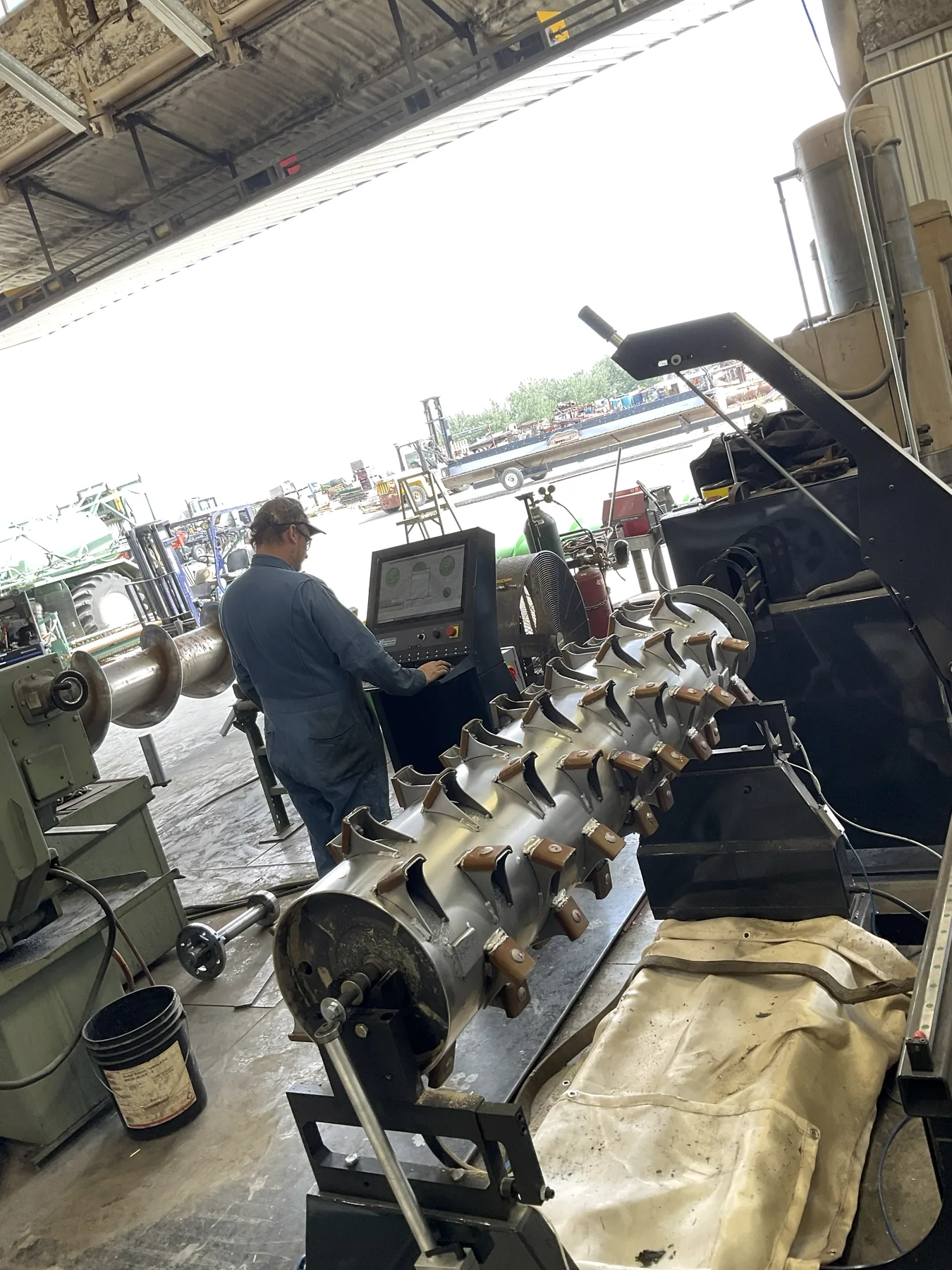
Balancing process
Set up the rotor. Read the result.
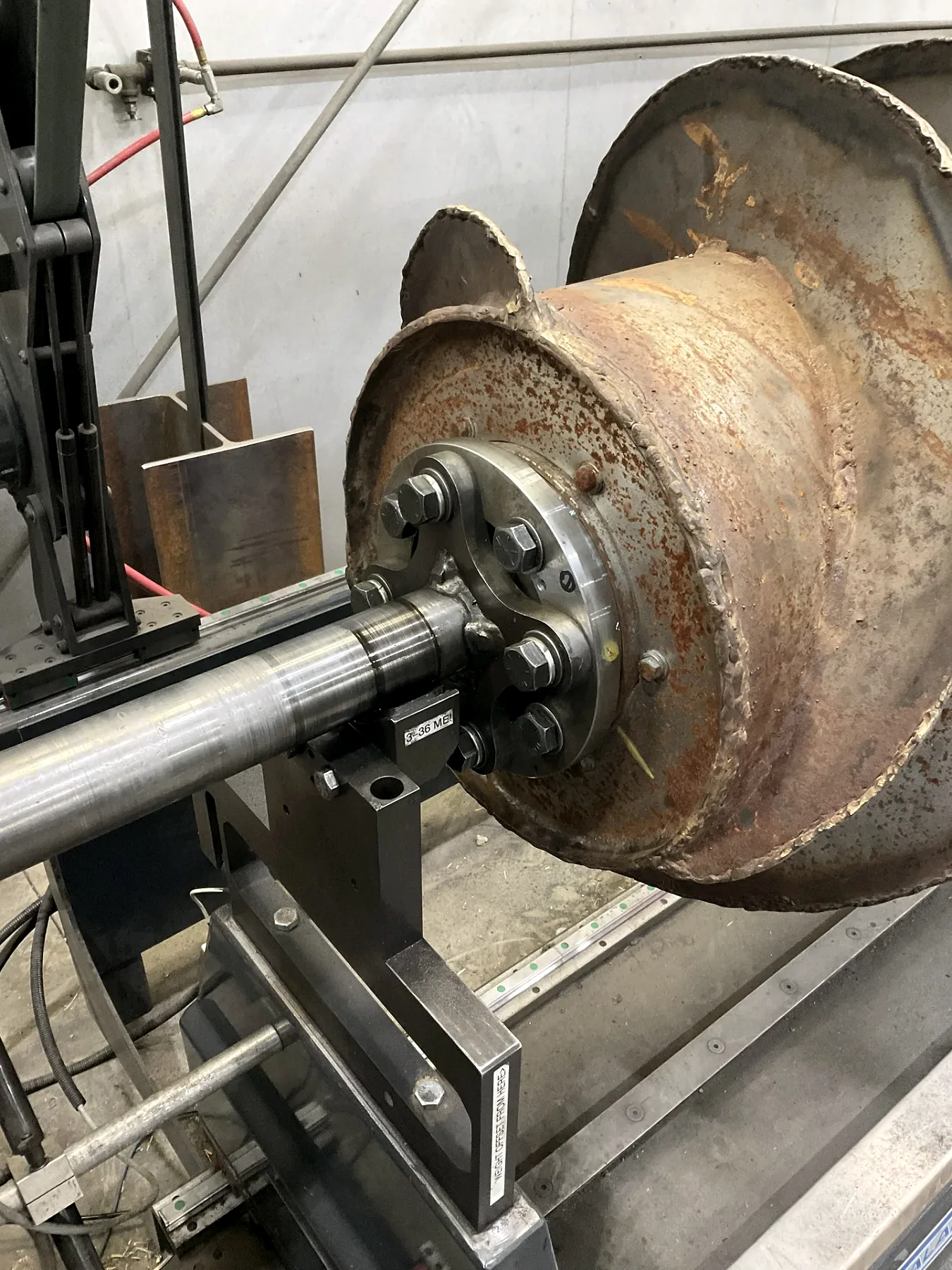
The operator mounts the prepared component, works through the balancing sequence, and verifies the result. Repair needs are addressed before the final balance check.
Start with the rotor, the symptom, and the connected damage
We inspect the component, repair it when needed, prepare the assembly, and run the balancing sequence.
Related projects
Selected work using this process
Dynamic balancing shop work
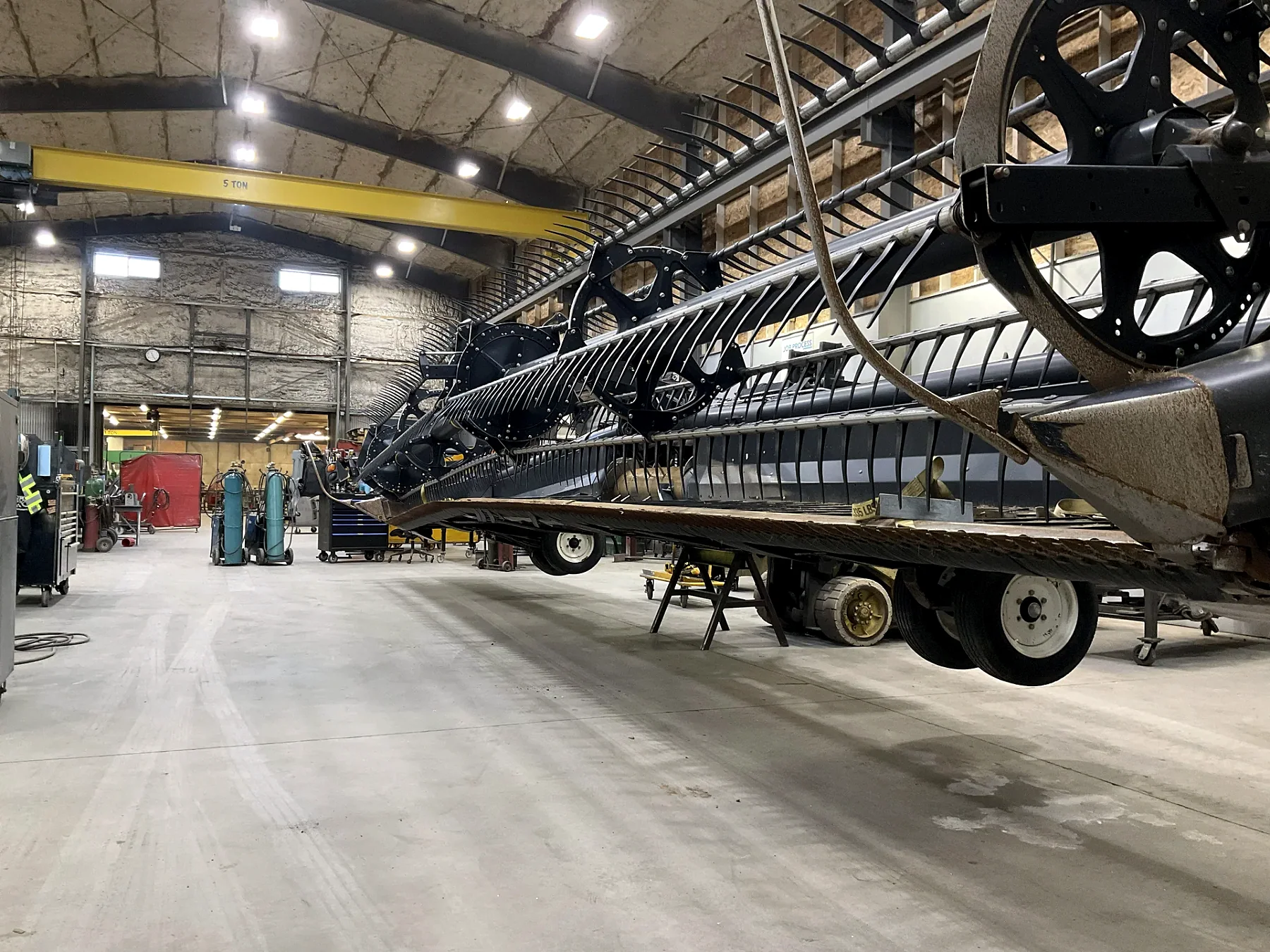
Case IH 2062 Draper header repair
Information to send
Describe the rotor and the vibration
Include dimensions, weight, mounting, operating speed, symptoms, condition, and photos.
- Describe the component and operating symptoms
- Inspect condition and identify repair needs
- Prepare the component for balancing
- Balance and verify the completed work
Useful questions
What component information should I send?
Send the dimensions, weight, photos, mounting configuration, operating speed, application, and symptoms. Those details establish the balancing setup.
Can balancing connect to auger repair?
Yes. Repair, rebuilding, preparation, and balancing can be coordinated around the same rotating component.
Markets
Common applications
Process control
Repair first when the part needs it
Cracks, worn mounts, bent parts, or loose pieces can affect the setup. We address the repair before the final balance check.
- Inspect the component and setup
- Identify repair issues before balancing
- Record and verify the balancing work